Dr Vicky Mason-Angelow, shares how her approach to evaluation changed over six years of Time to Talk Next Steps.
Listening to people’s experiences, challenging assumptions, and being prepared to do things differently sit at the heart of our new three year strategy.
Over the past six years, I’ve had the privilege of evaluating NDTi’s Time to Talk and Time to Talk Next Steps programmes in England and Scotland. These programmes centre on young people with additional support needs who have often been repeatedly and systemically failed by education, health, and social care services.
What has stayed with me from this work is not a model or a framework. It’s the relationships, the trust, and the way conversations unfold when young people are given space to lead, rather than being asked to respond. Yet, trying to evidence that, to make it visible in ways that systems and funders recognise, has been far from straightforward. The reasons for which, I think, comes down to this one question:
What happens when you try to measure something that works precisely because it resists being systematised?
Trying to measure it anyway
Back in 2020/2021, I approached the evaluation, as I had been trained to. Alongside the delivery team, I developed an outcome framework, introduced surveys and monitoring tools, and trialled both standardised and bespoke measures. On paper, this all made sense, but in practice, the gaps showed up and quickly.
Response rates were low…very low! Supporters told me the tools disrupted the flow of sessions or didn’t sit comfortably in spaces built on trust. Often, they were adapted or quietly set aside. And when I looked at the data we were collecting, it rarely matched what I was hearing from those closest to the work. The richness, the nuance, and the relational shifts simply weren’t translating.
Over time, I stopped seeing this as just a problem with the tools. Instead, I began to really listen to what was happening in the sessions themselves. A conversation that might have unfolded naturally becoming slightly more structured once a tool was introduced. A young person pausing, or pulling back, when asked to complete a survey. A supporter hesitating, weighing up whether using a tool would support or disrupt the relationship they were building. These were small moments, but I was hearing them with alarming consistency, and they stayed with me. Because they pointed to something deeper than low response rates or imperfect measures. They suggested that the act of trying to capture the work was, in subtle ways, beginning to shape it.
So, I found myself sitting with an uncomfortable tension. The more I tried to standardise and evidence what was happening to meet the requirements of funders, the more I risked shifting the work away from the very conditions that made it effective in the first place.
And that led me to a question I can’t easily resolve:
In trying to measure the work, am I beginning to change it?
For young people who had already experienced systems as something imposed on them, something that assesses, categorises, and often misunderstands, the introduction of evaluation tools could, at times, echo those same dynamics. Even when that wasn’t our intention.
2022: Choosing to pause and try something different
By summer 2022, partway through the three-year Time to Talk Next Steps England programme, that question had become too significant to ignore. So, I paused the evaluation. Not because there was clear alternative, but because continuing as I was didn’t feel right.
In many ways, this felt like stepping away from what is often expected of evaluation. But it was also an acknowledgement that if we want to create more inclusive and person-centred ways of working, we need to be willing to question the methods we use as well as the systems we are evaluating. Sometimes innovation is not about introducing something new. It’s about having the confidence to stop doing something that is getting in the way.
I stepped back and listened to supporters, young people, and families. In doing so, I began to rethink what the evaluation could look like if it were more aligned with the values of the programme.
This is where NDTi began investing in a more intentionally peer-led approach to evaluation. Rather than asking young people simply to participate in evaluation, we explored what it meant for them to help shape and lead it. That shift reflected a broader commitment to sharing power, valuing lived experience, and recognising young people as experts in their own lives.
Due to the flexibility of the programme’s funding, I was able to work with three young people to develop and deliver training so they could take on evaluator roles themselves, creating space for conversations that felt more natural, more equal, and more reflective of lived experience.
The conversations this group of young people led were different. They brought a depth and honesty we hadn’t been able to reach through surveys or standard tools. But they also brought the challenge into sharper focus.
This way of working takes time, resource, and continuity. It isn’t always possible within funding constraints or the realities of who is available to take part. So while it felt like a step in the right direction, it didn’t resolve the tension entirely.
What I’m left with
This experience has shifted how I think about evaluation.
I no longer see low response rates as something to fix, but as something to pay attention to; a signal that something isn’t quite aligned. I place more weight on what I hear from supporters and young people, even when it doesn’t fit neatly into frameworks.
And I’ve seen how powerful it can be to hear directly from young people, especially through peer-led approaches, while also recognising how difficult that is to sustain.
What I’m left with is not a clear solution, but a set of questions I’m still sitting with:
- What counts as valid evidence in relational, trauma-informed work?
- Who is best placed to generate that evidence?
- What are we willing to let go of in order to stay true to the work itself?
I don’t have neat answers, but I do know that this experience has changed how I see my role. If the work itself is relational and grounded in trust, then evaluation cannot sit outside of that. It has to be part of it and accountable to it. What that looks like in practice is still evolving as we move in the Time to Talk Next Steps Scotland 2026/2027 programme.
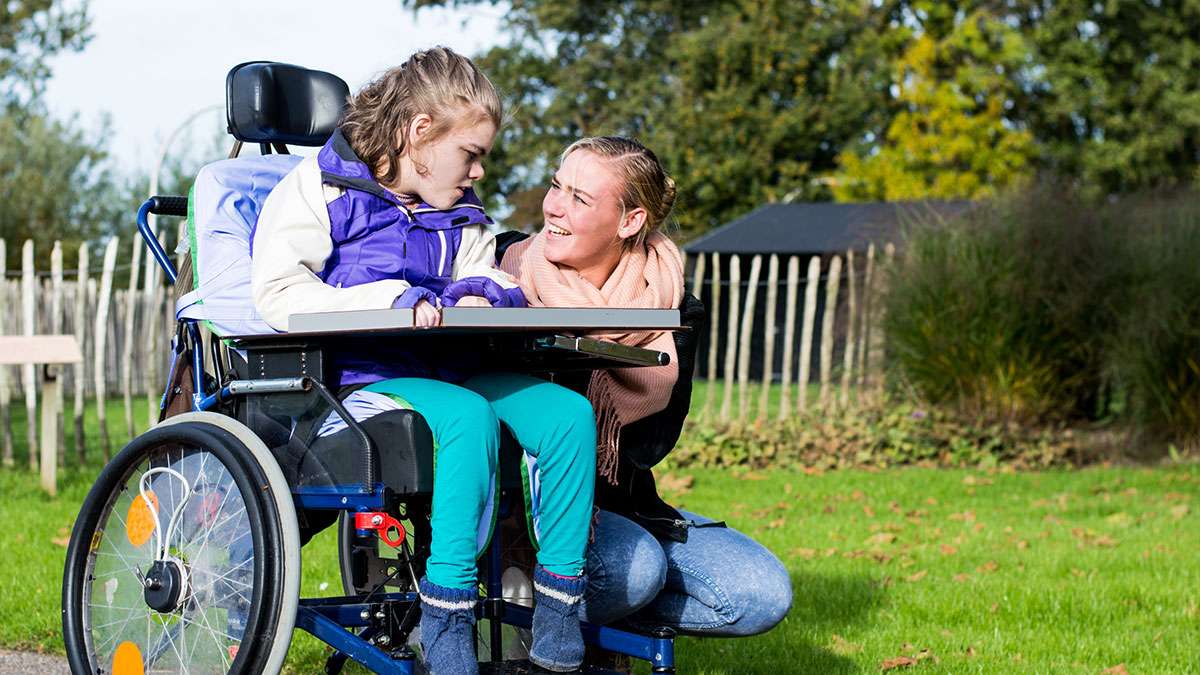
One of the most important shifts in Time to Talk Next Steps came when young people themselves began shaping conversations about what mattered, what felt meaningful, and what they wanted to see change.
These questions feel particularly relevant now. Across health, education and social care, there is growing recognition that traditional measures do not always capture the things that matter most to people. NDTi’s new strategy challenges us to rethink systems and cultures so that they work better for everyone. For me, that challenge extends to research and evaluation too. If we are serious about putting people at the centre, then we must also be willing to rethink how knowledge is created, whose voices are valued, and what counts as evidence in the first place.
Because ultimately, if we want to build more inclusive futures, young people’s voices cannot simply inform the conversation, they must help shape it. And that includes shaping how we understand, evidence and learn from the things that matter to them.